
The short answer
A durable exterior repaint in Coconut Creek starts with pressure washing and mildew treatment, followed by crack repair, masonry primer on chalky stucco and two coats of a UV-resistant acrylic or elastomeric finish. The drier months from November into April are the easiest window, but work continues in summer with early starts.
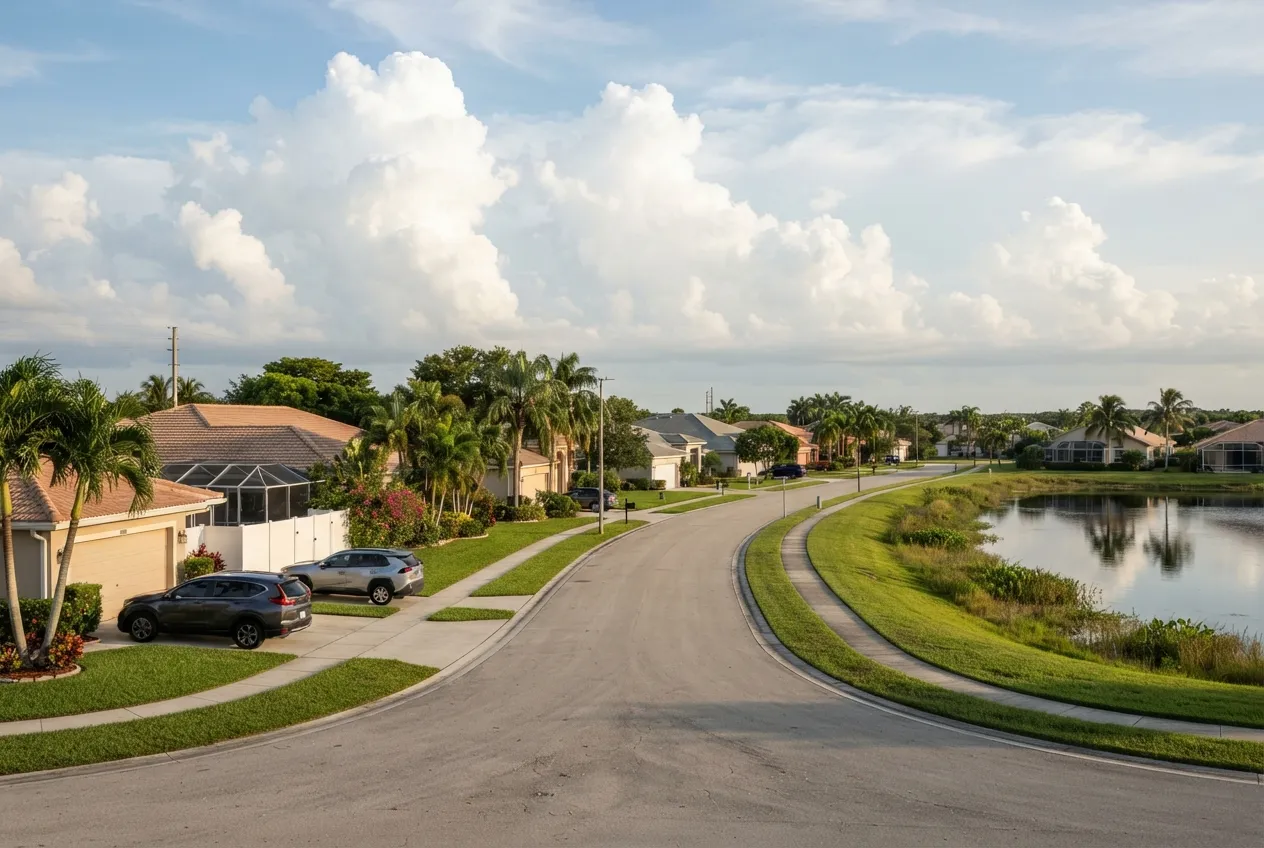
Look closely at the south and west walls of a Coconut Creek home and you can usually read its paint history: a slightly bleached color, a powdery residue that comes off on your fingers, gray streaks below the roofline, and fine cracks running across the stucco. None of that is unusual in northern Broward County, where strong sun, heavy summer rain and constant humidity work on every exterior surface. CraftEdge Painters travels about six miles east from Coral Springs to repaint houses, townhomes and villas in 33066 and 33073. We focus on what keeps an exterior looking good longer here: deep cleaning, honest repairs and coatings chosen for the climate rather than for the label.
What the climate does to paint here
Coconut Creek has a tropical climate with no fully dry season. From May through October the air is hot and wet, and afternoon thunderstorms roll in on many days. Water sits on window ledges, splashes up from planting beds onto the lower wall and keeps shaded areas damp long enough for mildew and algae to take hold.
The sun does its own damage. UV light breaks down the binder in paint, which is why older coats turn chalky and dark colors lighten unevenly. Stucco over concrete block expands and contracts with daily heat, opening hairline cracks that let rain behind the coating. A good exterior job addresses all three problems instead of just adding fresh color.
Our exterior sequence, step by step
Every house is a little different, but most Coconut Creek exteriors follow the same core order.
- Inspect walls, fascia, soffits, doors and trim, noting soft wood, rust stains and cracks
- Pressure wash the entire exterior and treat mildew so new paint does not trap spores
- Let the surface dry fully, which in humid months can take longer than people expect
- Rout out and fill larger stucco cracks, and caulk gaps around windows and penetrations
- Spot-prime repairs and apply masonry primer wherever the old paint is chalky or bare
- Apply two finish coats, cutting in trim, doors and shutters in their own colors
- Remove masking, clean up and walk the house with you to check every side
Choosing between acrylic and elastomeric
A quality exterior acrylic is the right choice for many homes. It breathes, holds color well and is easy to touch up years later. Elastomeric coatings are thicker and stretch over small cracks, which makes them useful on stucco walls that keep developing hairline lines or that take a beating from wind-driven rain.
Elastomeric is not automatically better. It needs a sound, clean surface and the right primer, and it can trap moisture if applied over damp walls. We look at the condition of your stucco and talk through the trade-offs before recommending either one. For trim, doors and fascia, a semi-gloss acrylic sheds water and wipes clean.
Color choices and community guidelines
Many neighborhoods in Coconut Creek are part of a homeowners association, and associations often keep an approved palette for body, trim and door colors. Before scheduling, check with your board about what needs approval and how long it takes. We can provide product names and color codes to include with your application.
Within those limits, lighter body colors reflect more heat and tend to show fading less, while deep accent colors on doors and shutters add contrast without covering the whole house in a shade that bleaches quickly. Testing sample patches on a sunny wall and a shaded wall shows how the colors really look.
Scheduling around rain and storm season
November into April is usually warmer and drier, so it is the most comfortable time for an exterior repaint. Summer work is still very doable; we start early in the day and plan to have coats on and drying before afternoon storms arrive. Hurricane season runs June 1 to November 30, and some owners like to finish caulking and painting before peak storm months to keep water out of the walls.
We also paint exteriors in nearby Margate, Pompano Beach, Parkland, North Lauderdale and Tamarac, so crews are often in the area.
More services in Coconut Creek
- Interior Painting in Coconut Creek
- Cabinet Painting in Coconut Creek
- Residential Painting in Coconut Creek
- Commercial Painting in Coconut Creek