
The short answer
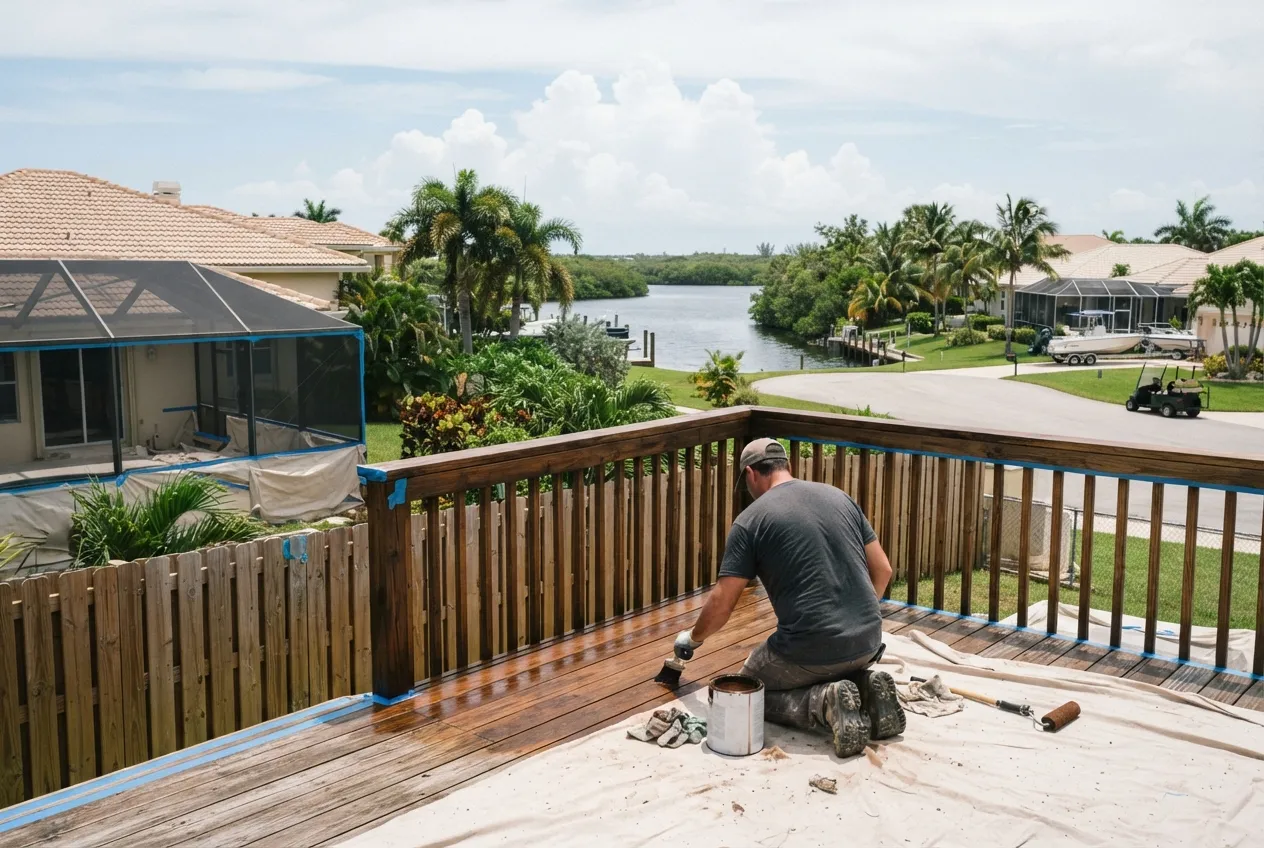
Staining is the right move when deck or fence wood is sound but graying, dry or water-stained. We clean, brighten, sand and repair the wood, then apply a penetrating or semi-transparent stain made for heat, UV and humidity.
Wood outdoors in South Florida has a hard life. Boards bake under strong sun, soak up water during summer downpours and stay damp in shady corners long enough for mildew and algae to take hold. Without a protective stain, a pool deck or privacy fence turns gray, splinters and starts to crack within a few seasons. CraftEdge Painters cleans, repairs and stains wood decks, fences, pergolas and gates for homeowners in Coral Springs, Parkland, Coconut Creek, Margate and the surrounding area. This page explains what the process looks like and how to keep the wood protected.
Signs your wood needs stain
A quick test is to sprinkle water on a deck board. If it beads up, the old finish is still working. If it soaks in and darkens the wood within a minute, the surface is unprotected. Other signals include a silvery gray color, rough or fuzzy grain, black mildew spots, peeling film from an old sealer, and fence pickets that have started to cup or split.
Staining works on wood that is still structurally sound. If boards are soft, posts wobble or the fence leans after a storm, those parts need carpentry repair or replacement first, and we will tell you which pieces are past saving.
- Water soaks in instead of beading
- Gray, weathered or uneven color
- Mildew or algae spots in shaded areas
- Old sealer peeling or flaking
- Splinters and raised grain underfoot
Protecting your yard, pool and house
Deck and fence jobs happen right next to plants, lawn, pool water and the walls of your home. Before cleaning, we wet down nearby plants and cover delicate shrubs and flower beds with breathable drop cloths. Pool edges are covered or shielded so cleaning solution and stain drips stay out of the water. Patio furniture, grills and planters are moved off the deck, and the base of stucco walls, pavers and concrete next to the wood are masked to prevent splatter.
We also pay attention to runoff. Wood cleaners and brighteners are rinsed thoroughly, and the flow is directed away from sensitive landscaping where possible.
Getting the wood ready
Stain soaks into wood rather than sitting on top like paint, so the surface has to be clean, open and dry. The prep sequence below is adjusted to the type of wood and the condition of any old coating.
- Cleaning: a wood cleaner and gentle, low-pressure wash remove dirt, mildew and gray fibers without gouging the grain
- Scraping: flaking sealer or old solid stain is scraped or stripped where it would block new stain from penetrating
- Brightening: a wood brightener restores the natural tone after cleaning and helps the new stain absorb evenly
- Sanding: rough spots, raised grain and splinters are sanded smooth, with extra attention to handrails and stair treads
- Patching and repairs: popped nails are reset or replaced with screws, and small cracks are filled with an exterior wood filler where appropriate
- Caulking: joints where the deck ledger or fence meets the house are sealed to keep water out of the framing
- Priming: only used on fence sections receiving a solid-color stain or paint, never under a penetrating stain
Choosing a stain for the Florida climate
Stain opacity determines how much of the grain shows and how much UV protection you get. Transparent and toner stains show the most wood but need recoating more often under strong sun. Semi-transparent stains, the most popular choice for pressure-treated pine decks and fences, add color while still letting the grain show and offer better fade resistance. Solid stains look closer to paint and hide mismatched boards well, though they can show wear on high-traffic deck surfaces.
For South Florida, we look for products with mildewcide and UV blockers. Oil-based penetrating stains soak deep into dry wood, while modern water-based stains dry faster, stay cooler underfoot and resist mildew well. Lighter colors reflect more heat on pool decks, which matters when you walk on them barefoot in July.
How the stain is applied
Wood has to be dry before staining, so after washing we usually wait at least a day or two with no rain, longer during the wet season. Application happens in the morning or late afternoon, avoiding direct midday sun that makes stain dry too fast and leave lap marks. We brush, roll or spray depending on the surface, always back-brushing to work stain into the grain and board ends, then wipe away any excess that would otherwise leave a sticky film. Many penetrating stains need one generous coat; semi-transparent and solid products often get two.
Fences are worked top to bottom, one section at a time, with attention to both sides when you want them to match. On decks, boards are stained along their full length to avoid stop marks.
What affects the price and how to maintain it
We quote staining after looking at the wood, because the work can vary a lot from one yard to the next. After the job, simple maintenance keeps the stain doing its job for longer.
- Surface condition: heavy mildew, peeling old coatings and repairs add time
- Square footage: deck area, fence length and how many sides are stained
- Height and access: elevated decks, stairs, tall fences and tight side yards
- Number of colors: different tones for rails, posts or pickets
- Trim detail: lattice, balusters, pergolas and decorative caps
- Stain quality: higher-grade products with better UV and mildew protection
- Upkeep: sweep leaves and debris off decks regularly, rinse mildew-prone areas, keep sprinklers from hitting fence boards, and do the water-bead test each year to know when a maintenance coat is due